Assuta Medical Center

About the Clinic





There are no residents or interns at the Assuta Medical Center — only world-renowned professors and top-level physicians
At Assuta, more than 30% of diagnoses made in other clinics are disproved
The largest number of IVF procedures is performed here — over 7,000 procedures per year
Joint replacement with an artificial prosthesis is one of the most common orthopedic procedures
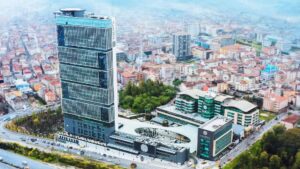
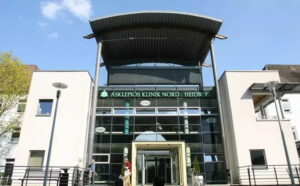
Assuta is the largest network of private clinics in Israel, combining five-star hotel conditions with a high level of medical care. The network consists of 11 branches: diagnostic centers (Ashdod and Ra’anana), an inpatient facility, a dialysis institute, and the Relax complex, which includes a hotel and rehabilitation center.
Assuta was the first in Israel to receive international JCI accreditation, confirming the high quality of medical services. Patients are provided with private, comfortable rooms equipped with a shower, toilet, internet, and TV, and throughout the treatment process, they have access to the services of a coordinator-interpreter.
The orthopedic department performs a wide range of procedures: joint replacement, surgical treatment of fractures and spinal tumors, herniated disc removal, spinal stenosis surgery, scoliosis treatment, and more. The most common procedure is endoprosthetics (joint replacement with a prosthesis), which is used for irreversible joint changes caused by trauma, degenerative, or inflammatory processes. Unique operations are performed here for simultaneous replacement of both knee joints, allowing patients to avoid unnecessary surgical interventions. Among the orthopedic innovations at Assuta is a tendon fusion technique, offering a less invasive approach and a shorter recovery period. Sports orthopedics is also highly developed, addressing sports injuries and strains.
Assuta Medical Center also offers a unique procedure—cryoablation, which serves as an alternative to partial nephrectomy (removal of the affected kidney section), a surgery that carries a high risk of bleeding. During cryoablation, liquid nitrogen at extremely low temperatures is injected into the affected kidney area under visual guidance, destroying the tumor.
When a tumor cannot be surgically removed, radiation therapy may be recommended, including IGRT (Image-Guided Radiation Therapy) for precise targeting. For diagnostic purposes, advanced bronchoscopes with Endobronchial Ultrasound (EBUS) are used, allowing access to lymph nodes through the bronchi to collect tissue samples for analysis.
Doctors of the Clinic
-
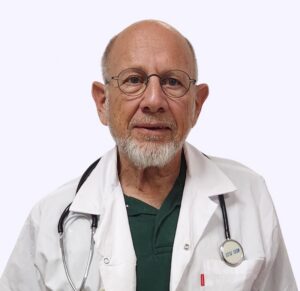 Doctor Aryeh Arish
Hepatobiliary Surgeon
-
 Doctor Joseph Klausner
Specialist in surgery for gastric and pancreatic cancer, HIPEC methods
-
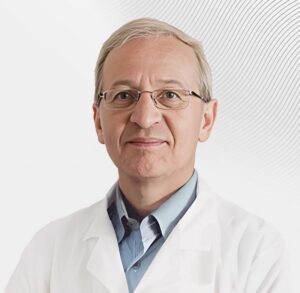 Doctor Boris Gendel
Pulmonologist
-
 Doctor Jacob Schachter
Oncologist
-
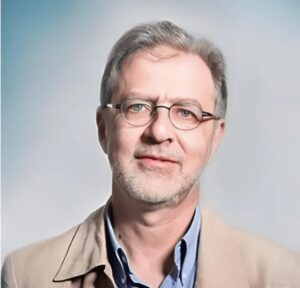 Doctor Haim Matzkin
Specialist in brachytherapy for prostate cancer
-
 Doctor Yuza Hen
Specialist in sexual dysfunctions and reconstructive surgery
-
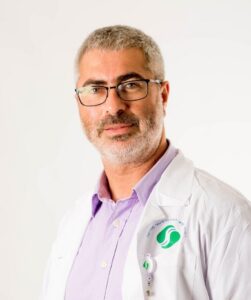 Doctor Nicola J. Mabjeesh
Specialist in minimally invasive surgery for prostate cancer and brachytherapy
-
 Doctor Gad Keren
Cardiologist-Arrhythmologist
-
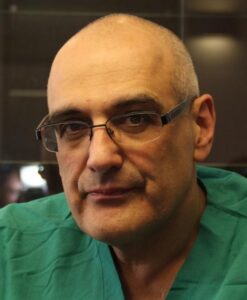 Doctor Herman Handelman
Interventional Cardiologist
-
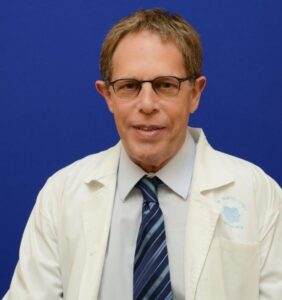 Doctor Zvi Ram
Neurosurgeon-Oncologist
-
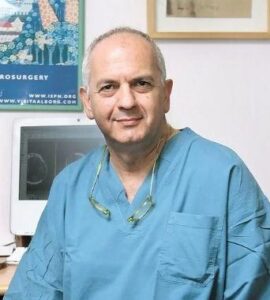 Doctor Shlomo Constantini
Pediatric Neurosurgeon
-
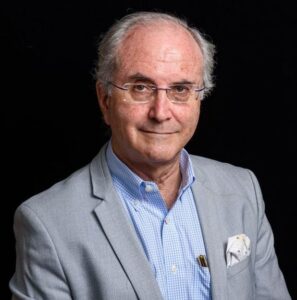 Doctor Yehuda Schwartz
Pulmonologist
-
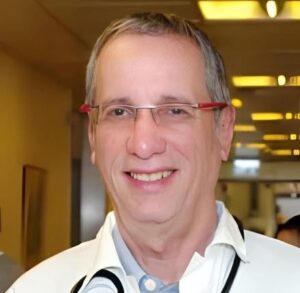 Doctor Moti Goldenberg
Gynecologic Surgeon
-
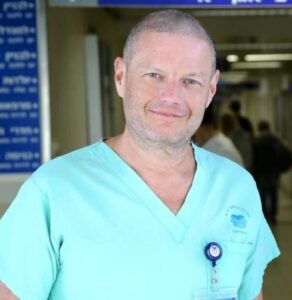 Doctor Dan Grisaru
Oncogynecologist
-
 Doctor Abraham Golan
Obstetrician-Gynecologist
-
 Doctor Aaron Menahem
Orthopedic Surgeon
-
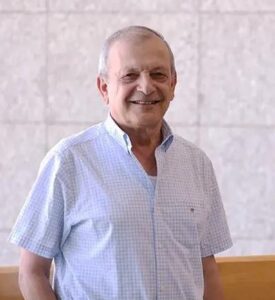 Doctor Elhanan Luger
Orthopedic Surgeon
-
 Doctor Ilya Pekarsky
Specialist in herniated discs, scoliosis and intervertebral disc replacement
-
 Dan Aderka
Oncologist-Gastroenterologist