

 Maria Hilf Clinic
About the Clinic


In visceral surgery, urology, and thoracic surgery, the clinic utilizes the DaVinci® Xi robotic system
Annually, 36,000 patients are treated in hospital and 120,000 on an outpatient basis
Modern Ga⁶⁸‑PSMA examination for prostate cancer
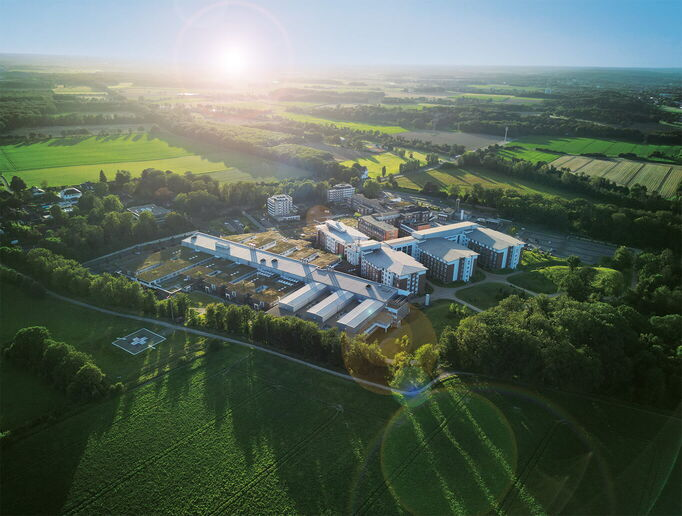
The Maria Hilf Clinic was founded in 1856 and today serves as an academic teaching base of the RWTH Aachen University. It is a major medical center with 754 beds, 17 specialized departments, and 2,500 employees. Key areas of clinical practice: oncology, cardiology (1,500+ angio-plastics per year), neurology, orthopedics and surgery.
Clinic Advantages:
- High-tech equipment — linear accelerators, PET-CT, gamma cameras for nuclear medicine
- Amount of aid — 36,000 inpatients and 120,000 outpatients annually.
- Thyroid Radioiodine Therapy Unit and 3D Navigation for Arrhythmia Ablation
The oncology department has a comprehensive approach to treating tumors: radiation therapy, chemotherapy, surgery and immunotherapy. The clinic offers modern radioimmunotherapy methods. Chemotherapy is exclusively based on molecular diagnostics, allowing for individualized treatment plans.
The cardiology center stands out for its use of innovative techniques: transcatheter aortic valve replacement (TAVI) and correction of chronic heart failure using cardiac resynchronization therapy devices.
The neurological and neurosurgical departments, combined in a neurocenter, specialize in trombectomy – the mechanical removal of thrombosis during strokes – and deep brain stimulation (DBS) for Parkinson’s disease. These methods offer a chance to significantly improve patients’ quality of life.
In the orthopedic department, surgeons perform minimally invasive endoprosthetics of the hip joint. In addition, together with neurosurgeons, they perform operations on the spine using state-of-the-art navigation systems to achieve maximum surgical accuracy.
The nuclear medicine department offers early and precise diagnostics using PET-CT with Ga⁶⁸‑PSMA, enabling the detection of metastases in prostate adenocarcinoma at the earliest stages.
In thoracic surgery, all operations are performed using the Da Vinci robotic system, ensuring high accuracy and safety of interventions in the thorax cavity.
Finally, the urology department provides a full cycle of services – from accurate diagnostics to high-tech low-invasive operations. Here special attention is paid to the treatment of oncological diseases of the genitourinary system, urinary disease, disorders of urination, male infertility and age urology. Doctors are actively applying robotic technologies (Da Vinci), laser techniques and 3D navigation to achieve better results.
Doctors of the Clinic
-


 Doctor Emmanuel Chorianopoulos Cardiologist
 -
 Doctor Dennis Ladage Pulmonologist
 -
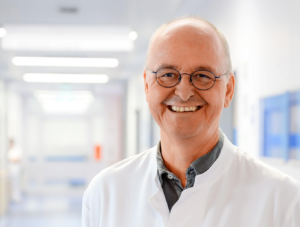 Doctor Herbert Sperling Urologist