


The Latest Technologies in Japanese Medicine: What Methods Are Available for Treatment and Diagnostics?
Japan is a leading country, known not only for its rich culture and technological achievements but also for its progressive healthcare system. The number of patients coming here for treatment grows annually, with the total number of medical tourists reaching 20 million.
The Japanese government has implemented supportive measures in the medical tourism sector. One of these measures is the introduction of “medical stay” visas, issued by the Ministry of Foreign Affairs of Japan. These visas are granted to patients in need of prolonged treatment or complex surgery, as well as those requiring rehabilitation after an illness or injury.

The average life expectancy in Japan is among the highest in the world, standing at 87 years for women and 81 years for men. Japan also leads in the number of centenarians. This achievement in healthcare was reached only after senior medical care departments began to be established nationwide, leading to a new emphasis on caring for the elderly population.
Japanese medicine, like American, is largely based on advanced technologies. The country has 137 research institutes, many of which have an international reputation. Japan ensures unhindered access to modern technologies, such as MRI, CT and cystoscopy.
Additionally, Japan has the world’s lowest infant mortality rate and the highest number of hospital beds per capita, which demonstrates the high efficiency of the health care system.
Advantages of Japanese Clinics
The popularity of Japanese clinics among international patients is high, and for a reason — they offer high-quality and affordable medical care. Japan has approximately 140,000 medical facilities, most of which meet the highest standards of organization.
Key distinguishing factors of Japanese clinics include:
- Accreditation and Prestige
Most clinics are accredited by international standards used in healthcare systems. Accreditation is conducted by authoritative organizations, such as JCI – American safety standards system (more on international clinic accreditations and ratings), Japan Council for Quality Health Care – assesses hospitals from an objective, scientific and professional perspective regarding the organization management and the quality of health care services provided.
- Top Specialists
Many doctors in leading clinics have studied at the best medical universities globally or have trained under professionals in their field.
- Status of Wellness Centers
Most hospitals are long-term medical care institutions, where patients undergo not only full treatment courses but also all rehabilitation procedures in an inpatient setting.
- Affordable Treatment Costs
Compared to American and European prices for similar services.
- Highest Level of Progress
The widespread implementation of high-tech, research-based developments into the work of physicians.
- Innovative Treatment Approaches
For instance, the National Cancer Center of Japan uses modern proton therapy (heavy-ion radiotherapy) as a primary method for treating tumors. This is highly effective in early stages and has significantly fewer side effects than conventional radiotherapy. High healthcare standards in this field are maintained by the Japanese Society of Radiological Technology.
Treatment Protocols and Drug Accessibility
Japanese doctors work strictly according to modern international protocols approved by the Japanese Medical Association. This is achieved by constantly monitoring new clinical recommendations. In addition, specialists in research centers often suggest adding innovations and revising existing protocols due to advanced technology and the highest level of involvement of medical professionals in research.
Japan ranks second in the world in terms of pharmaceutical market size, supported by extensive government support and transparent drug registration laws. There are two main regulatory organizations, the PMDA (Pharmaceuticals and Medical Devices Agency) and MHLW (Ministry of Health, Labour, and Welfare), which play a leading role in drug approval processes and ensure the safety of all authorized biopharmaceuticals. A distinct feature of Japan’s pharmaceutical market is the lengthy and complex process for foreign drugs to gain approval, including mandatory clinical trials.
Innovations in Popular Fields
Japanese medicine has achieved the greatest progress in areas where precision and minimally invasive intervention directly affect treatment outcomes. Below is an overview of the technologies currently used in the country’s leading clinics for treating musculoskeletal and nervous system conditions.
Orthopedics
Orthopedics is a top priority for international patients seeking treatment in Japan. Leading hospitals have gained a reputation as some of the world’s best due to the professionalism of their doctors and the latest developments.
Here are some procedures that Japanese hospitals currently offer for musculoskeletal issues:
Knee Joint Replacement with the iASSIST KNEE Navigation System
This system uses a gyroscope – a device that reacts to changes in angles. The orthopedic surgeon analyses the treatment and the depth of resection in real time. This improves the accuracy of the incisions and ensures perfect alignment with the endoprosthesis. With this method, the efficiency of the operation and the service life of the prosthesis are increased many times over.
Spine Surgery for Severe Injuries
Complex spinal surgeries, including multiple vertebral compression fractures, requires a high-tech approach. In this case, two surgical robots operated by experienced surgeons are used simultaneously:
- One of them, Artis ZEEGO, is an innovative system that scans the operating field in real time and provides 3D images. This allows the orthopedic surgeon to perform ultra-precise manipulations that would be impossible under other conditions.

- Meanwhile, the second robot, Renaissance, performs minimally invasive reconstruction. Using these two systems, damaged vertebrae are stabilized with implants, restoring the support function of the spine. Previously, before this type of surgery, patients with such severe injuries were left disabled. Now, with this technology, they have the opportunity to fully recover and regain lost motor skills.
Minimally Invasive Phage Therapy for Treating Infected Wounds
This method is based on introducing specific viral solutions — bacteriophages — that destroy microbes resistant to antibiotics. This makes it possible to avoid limb amputation.
Cellular Technology and Tissue Engineering
Cultivation of the patient’s stem cells on biocompatible carriers, followed by transplantation into damaged structures using endoscopy. Another latest development in cellular technology is intervertebral disc plasty, which is used for osteochondrosis.
Spinal Fusion Micro-Surgery
Used to correct spinal deformities of variety genesis. The key point of the procedure is to provide stability in the desired spinal region by fusing the adjacent vertebrae and maintaining a set height between them to prevent nerve root compression. In addition, Spinal Fusion is used for incurable intervertebral disc disease. During the surgery, the disc is replaced with an implant (Peek-cage) that is filled with the patient’s bone tissue. The procedure is performed using the Spine Assist surgical robot – a navigator for precise guidance of the instruments and the implant. This approach guarantees high accuracy of the manipulation and efficiency of the final result.
Neurosurgery
Innovative approaches in neurosurgery provide patients with complex pathologies a chance for recovery and rehabilitation. Japanese research institutes, together with leading scientists, have developed effective treatment methods for common diseases.

Technologies in Japanese Neurosurgery?
- Neuroprosthetics: Electronic mini-implants that are placed on the surface of the spinal cord and act on the neural networks beneath them without using brain signals. They are used to restore limb sensation in cases of complete damage of the peripheral nervous system (e.g. paralysis and spinal cord rupture)
- Brain Mapping: Used to identify and preserve critical brain regions during stroke diagnostics.
- High-Intensity MRI Lasers: Non-surgical brain tumor removal.
- Osteogenic Implants: Speed up recovery after operations on the central nervous system.
- Brain Machine Interface (BMI): Advanced computer technologies enabling the brain to move limbs damaged after a stroke.
Robotic surgery with the innovative da Vinci and ROSA ONE Brain units is an important part of brain surgery (learn more in our article Robotic Surgery Abroad: Da Vinci, ROSA, ARTEMIS). The uniqueness of the surgical interventions lies in the precise guidance of the instruments and the procedure through a mini hole in the skull.
Another advanced method of neurosurgery is Laser Interstitial Thermal Therapy (LITT), which involves the active use of an MRI-guided probe to remove hard-to-reach or inoperable tumors. This method leaves the surrounding tissue intact.
For patients with essential tremor and Parkinson’s disease, leading Japanese clinics offer Deep Brain Stimulation (DBS), a procedure involving the implantation of a brain stimulator that sends impulses to specific areas of the central nervous system.
Japanese neurosurgery’s success is attributed to both the integration of advanced innovations and ongoing training of neurosurgeons with global experts.
Artificial Intelligence in Japanese Medicine
AI is widely utilized in Japanese medical practice, from test result analysis to robotic assistants. AI-driven healthcare projects are a priority investment area in Japan, offering quick returns, and the demand for digital solutions in healthcare is steadily increasing.

Japanese scientists have applied AI to recreate images based on brain signals, potentially useful in treating hallucinations and sleep disorders. Additionally, neural networks are also used to study the results of tomography and endoscopy, which helps speed up the interpretation process and quickly identify patients with pathologies. AI is also used as virtual and augmented reality technologies for simulation and learning skills.
You can learn more about how AI is transforming diagnostics and treatment worldwide in our article.


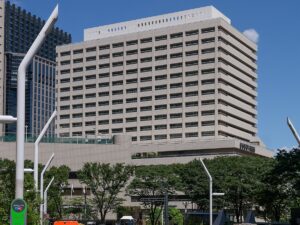
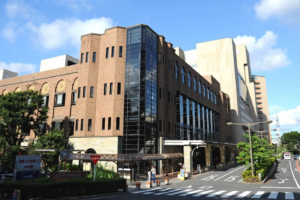

Popular Medical Treatment Destinations in Japan
Frequently Asked Questions
Japan is best known above all for its achievements in oncology, orthopedics and traumatology, neurosurgery, cardiology, gastroenterology, and treatment of nervous system disorders. Japanese clinics have well-developed robotic and minimally invasive surgery, advanced radiation therapy, and cell-based technologies. For example, Tokyo University Hospital specializes in oncology, robotic surgery, and complex clinical cases. Treatment in Japan is especially worthwhile when high-precision diagnostics, complex surgery, or a second opinion from leading specialists are needed.
Japan’s main advantage is its combination of high clinical expertise, technological advancement, and strict government regulation. The country is actively adopting robotic surgical systems, innovative medical devices, and regenerative technologies, and new drugs and devices undergo rigorous evaluation by PMDA and Japan’s Ministry of Health, Labour and Welfare.
Treatment costs in Japan depend on the diagnosis, clinic, treatment method, and scope of care, and are calculated individually. Diagnostic programs have fixed prices: for example, at the Japanese Red Cross Medical Center, a PET check-up starts from 147,400 yen, a brain MRI with MRA and carotid ultrasound costs 44,000 yen, and a chest CT scan costs 16,500 yen.
For treating an actual condition rather than a preventive check-up, Hospitality MedService helps select a specialist and clinic, submits the medical documents for review, and requests an individual treatment plan and preliminary cost estimate before the trip.
Hospitality MedService can arrange a consultation with a specialist at a Japanese clinic within 1-2 business days of receiving the medical documents — the timeline depends on the doctor’s specialization and case urgency. The company selects the right specialist and clinic for the diagnosis, schedules the consultation, and can arrange a remote consultation before the trip if needed. For in-person treatment, Hospitality MedService coordinates hospitalization and procedures, as well as the flight, accommodation, transfer, and interpreter.
This depends on your citizenship, length of stay, and treatment plan. Citizens of 74 visa-exempt countries can enter without a visa, usually for up to 90 days. Longer treatment or multiple visits require a Medical Stay Visa valid for 90 days, 6 months, or 1 year — stays over 90 days require hospitalization; for repeat visits, a multiple-entry medical visa valid for up to 3 years is available (each trip capped at 90 days, requiring a treatment plan from a Japanese doctor). Citizens of non-exempt countries need to arrange a visa in advance — the type and required documents depend on citizenship and purpose of travel. A Medical Stay Visa also requires a document package from the clinic and a registered guarantor organization.
Hospitality MedService helps organize treatment in Japan, prepare the necessary documents, and supports the patient at every stage of interaction with the medical institution and the guarantor organization.
Hospitality Medservice: Your Trusted Partner in Finding the Best Clinics Worldwide. Our platform features only accredited medical facilities equipped with advanced technologies and the latest treatment protocols. Compare clinic standards, meet experienced doctors, evaluate treatment costs, and rely on us to help organize:
- Medical travel
- In-person consultations
- Video consultations
- Second opinions
Submit a request on our website, and our medical coordinator will promptly get in touch with you.
Leave a request for a free consultation.
A coordinator will contact you as soon as possible

*Illustrations in this article are created using artificial intelligence and are for illustrative purposes only. These images are not photographs of specific clinics, doctors, or patients, but are used to visually represent the procedures and treatment areas described.