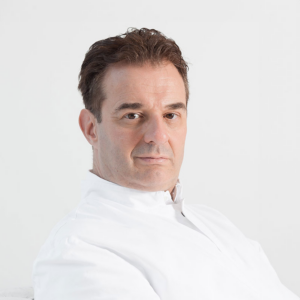
Doctor Hyuk Jin Choi

About the doctor



Hyuk Jin Choi is an ophthalmologist at Seoul National University Hospital (SNUH), specializing in diseases of the cornea and anterior segment of the eye. He is a former vice secretary-general of the Korean Ophthalmological Society and a board member of the Korean Corneal Society. His main areas of practice include cataracts, keratitis, corneal transplantation, diseases of the conjunctiva and sclera, dry eye syndrome, keratoconus, and refractive surgery. He also treats pediatric cataracts and fits specialty contact lenses.
Dr. Choi performs surgical procedures for cataracts and corneal diseases and conducts research into surgical treatment methods. His research interests include corneal transplantation, including experimental approaches using animal donor tissues, as well as the evaluation of ophthalmic surgical outcomes and the improvement of diagnostic techniques.
In addition to his clinical practice, Dr. Choi conducts ophthalmic research and contributes to scientific publications. His research profile includes studies on keratoconus, corneal transplantation, contact lens fitting, cataract treatment, and the assessment of ocular surface health.
Key areas of specialization:
- Corneal diseases and corneal transplantation
- Cataracts and anterior segment surgery
Dr. Hyuk Jin Choi’s main professional interests:
- Treatment of cataracts in adults and children
- Corneal transplantation
- Treatment of keratitis, conjunctivitis, scleral diseases, dry eye syndrome, and keratoconus
- Treatment of pterygium (growth of conjunctival tissue onto the cornea)
- Treatment of corneal and conjunctival tumors
- Refractive surgery
- Specialty contact lens fitting
- Research into new corneal transplantation techniques
- Evaluation of the outcomes and safety of ophthalmic surgery
Education
In Korea, medical education is structured so that after obtaining a basic medical degree, a doctor can immediately enter a doctoral program (PhD), bypassing a master’s degree. This is due to the emphasis on scientific research in medicine, and such a sequence of degrees is not an error but a feature of the educational system.