


Testicular cancer
Disease description
Testicular cancer is a malignant tumor of the epithelial tissues of the male gonads. It is relatively rare in the overall structure of oncological diseases, accounting for only 2% of all malignancies.
There are three peak age groups when testicular cancer is most commonly diagnosed:
- Boys under 10 years old (stromal tumors)
- Men of reproductive age (20—35 years old) (germ cell tumors)
- Elderly men over 65 years old
In 97% of cases, only one testicle is affected. Testicular cancer is considered an aggressive malignancy with rapid progression and metastasis.
Symptoms indicating the need for diagnosis and treatment
Like other types of cancer, early-stage testicular cancer is asymptomatic. As the tumor grows, characteristic clinical signs appear:
- Painless lump in one testicle (in rare cases, both)
- Scrotal asymmetry
- Dull aching pain in the testicle and above the pubic area
- Pain during urination and defecation
Diagnostic and treatment methods
Diagnosis
To diagnose testicular cancer, basic laboratory tests are performed to assess tumor markers: human chorionic gonadotropin (HCG) and alpha-fetoprotein (AFP).
To confirm the diagnosis, patients undergo scrotal ultrasound, computed tomography (CT), and magnetic resonance imaging (MRI). Aspiration biopsy is not recommended for testicular cancer; instead, tumor resection is performed.
Treatment
Highly qualified oncologists in leading global clinics determine treatment strategies based on the tumor type and stage. The primary approach is surgical intervention (orchifuniculectomy), which is indicated even at the first stage of cancer. After tumor removal, patients typically receive radiation therapy and chemotherapy.
Leading clinics in Europe offer testicular prosthetics after orchifuniculectomy to improve quality of life, as well as sperm cryopreservation before treatment to preserve fertility.
Innovations in global clinics
Israeli clinics have introduced the Da Vinci robotic surgery system for the removal of retroperitoneal lymph nodes, which are located in hard-to-reach areas. These surgeries use the latest-generation Da Vinci Xi system with enhanced 3D visualization.
Procedures
Top Clinics
-

 Freiburg, Germany
University Hospital of Freiburg
Freiburg, Germany
University Hospital of Freiburg
-
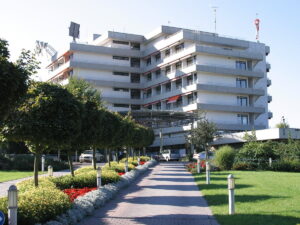 Bad Krozingen, Germany
University Heart Center Freiburg
Bad Krozingen, Germany
University Heart Center Freiburg
-
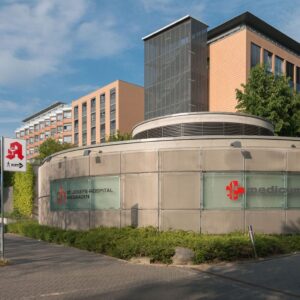 North Rhine-Westphalia, Germany
The United Catholic Clinics St. Antonius and St. Joseph
North Rhine-Westphalia, Germany
The United Catholic Clinics St. Antonius and St. Joseph
-
 Duisburg, Germany
Duisburg-Nord Hospital
Duisburg, Germany
Duisburg-Nord Hospital
-
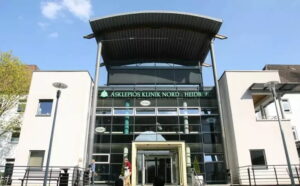 Hamburg, Germany
Asklepios Nord Heidberg
Hamburg, Germany
Asklepios Nord Heidberg
-
 Duisburg, Germany
Bethesda Clinical Complex
Duisburg, Germany
Bethesda Clinical Complex
-
 Oberhausen, Germany
Clinic Oberhausen of the Niederrhein complex
Oberhausen, Germany
Clinic Oberhausen of the Niederrhein complex
-
 Heidelberg, Germany
Heidelberg University Hospital
Heidelberg, Germany
Heidelberg University Hospital
-
 Berlin, Germany
Charité Clinic
Berlin, Germany
Charité Clinic
Top Doctors
-
 Doctor Manfred Zehender
Cardiologist
Doctor Manfred Zehender
Cardiologist
-
 Doctor Christoph Lill
Orthopedic Surgeon
Doctor Christoph Lill
Orthopedic Surgeon
-
 Doctor René Malzkorn
Orthopedic Surgeon
Doctor René Malzkorn
Orthopedic Surgeon
-
 Doctor Clemens Unger
Oncologist
Doctor Clemens Unger
Oncologist
-
 Doctor Christoph Müller
Neurologist-intensivist
Doctor Christoph Müller
Neurologist-intensivist
-
 Doctor Gabriele Linder-Wesel
Gynecologist-endocrinologist
Doctor Gabriele Linder-Wesel
Gynecologist-endocrinologist
-
 Doctor Justus Doister
Hemato-Oncologist
Doctor Justus Doister
Hemato-Oncologist
-
 Doctor Robert Timme
Oncologist-Gastroenterologist
Doctor Robert Timme
Oncologist-Gastroenterologist
-
 Doctor Ingolf Juhasz-Boes
Obstetrician-Gynecologist
Doctor Ingolf Juhasz-Boes
Obstetrician-Gynecologist