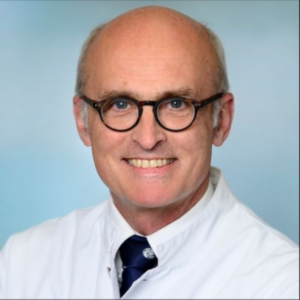


 Doctor Georg Schatzl

About the doctor



Professor Georg Schatzl is a renowned Austrian specialist in Urology and Andrology, with expertise in prostate diseases, urological oncology, and men’s health. He is a specialist in Urology and Andrology at Wiener Privatklinik and is also a member of the specialist team at the Central European Academy Cancer Center. His clinical practice focuses on the diagnosis and treatment of diseases of the genitourinary system, with particular emphasis on prostate disorders, prostate cancer, and age-related conditions affecting men’s health.
Professor Schatzl has many years of experience working in specialized departments of the Vienna University Hospital, where he headed specialized outpatient clinics for prostate diseases and andrology for many years. One of the main areas of his clinical work is the diagnosis and treatment of prostate diseases, including advanced diagnostic techniques for the detection of prostate cancer, such as fusion biopsy.
At Wiener Privatklinik, Professor Schatzl also specializes in urological and robot-assisted surgery and is a member of the Central European Academy Cancer Center team.
From 2003 to 2015, he served as Chairman of the Prostate Study Working Group of the Austrian Society of Urology.
Professor Georg Schatzl’s professional interests include:
- prostate diseases;
- prostate cancer and other urological malignancies;
- diagnosis and treatment of diseases of the urinary tract;
- men’s health and age-related changes in men;
- andrology;
- erectile dysfunction and other disorders of male sexual function;
- benign prostatic hyperplasia (BPH);
- advanced diagnostic methods for prostate cancer, including fusion biopsy;
- urological and robot-assisted surgery.
Professor Schatzl performs a wide range of urological procedures, including radical prostatectomy, surgery for kidney and bladder tumors, as well as surgical treatment of benign prostatic hyperplasia. His diagnostic practice includes ultrasound examinations, transrectal ultrasound and color Doppler imaging of the prostate, endoscopic examinations, and uroflowmetry.