


 Doctor Paek, Sun Ha
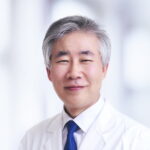
About the doctor

Professor Sun Ha Paek is a neurosurgeon at Seoul National University Hospital (SNUH), specializing in the treatment of brain disorders and movement disorders. Deep brain stimulation (DBS) plays an important role in his clinical practice, particularly in the treatment of Parkinson’s disease, tremor, and dystonia. He also specializes in Gamma Knife radiosurgery and the treatment of brain tumors.
Another key area of his work is the advancement of functional neurosurgery and the refinement of surgical techniques for treating movement disorders. At SNUH, Professor Paek has participated in training physicians from other countries in deep brain stimulation techniques, including live surgical demonstrations broadcast as part of educational programs.
In addition to his clinical practice, Professor Paek conducts research on brain tumors. His research includes the study of tumor tissue and the cellular mechanisms underlying tumor development, as well as the identification of biomarkers that may help improve understanding of disease progression.
In 2016, he performed a live international surgical demonstration in collaboration with the Mayo Clinic in the United States, during which two surgeons simultaneously implanted electrodes in both hemispheres of the same patient’s brain. He conducts long-term research into the effectiveness of deep brain stimulation (DBS). His studies have shown that quality of life can be maintained in patients with Parkinson’s disease more than 10 years after surgery.
Key areas of specialization:
- Functional neurosurgery — deep brain stimulation for Parkinson’s disease, tremor, and other movement disorders
- Neuro-oncology and radiosurgery — treatment of brain tumors, including Gamma Knife radiosurgery
Professor Sun Ha Paek’s main professional interests:
- Treatment of Parkinson’s disease
- Deep brain stimulation
- Treatment of tremor and other movement disorders
- Treatment of dystonia
- Treatment of facial muscle spasms
- Gamma Knife radiosurgery
- Treatment of benign and malignant brain tumors
- Surgical treatment of skull base tumors
- Research into the mechanisms underlying brain tumor development
- Development of new treatments for brain disorders
Education
In Korea, medical education is structured so that after obtaining a basic medical degree, a doctor can immediately enter a doctoral program (PhD), bypassing a master’s degree. This is due to the emphasis on scientific research in medicine, and such a sequence of degrees is not an error but a feature of the educational system.


