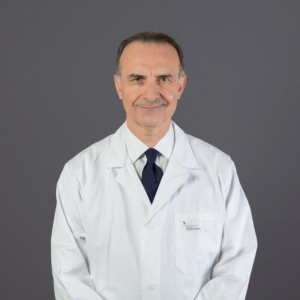
Doctor Young-Shin Ra

About the doctor



Professor Young-Shin Ra is a pediatric neurosurgeon at Asan Medical Center in Seoul and a professor at the University of Ulsan. He has over 40 years of experience in neurosurgery.
He specializes in treating brain tumors in children, including optic pathway and thalamic gliomas, which require an especially delicate surgical approach due to their proximity to vital brain structures. Another key area of his practice is moyamoya disease, a rare, progressive cerebrovascular disorder that causes narrowing of the brain’s blood vessels and increases the risk of stroke in children.
Professor Ra has authored numerous research studies on the surgical treatment of moyamoya disease and its prognostic factors. His other areas of expertise include craniofacial malformations, pediatric hydrocephalus, and congenital neurosurgical conditions that may not become symptomatic until adulthood. He completed a research fellowship at the Brain Tumor Research Centre at the University of Toronto.
In addition to his clinical practice, Professor Ra participates in scientific research and international professional events.
Key areas of expertise:
- Pediatric neurosurgery and surgical treatment of brain tumors in children
- Surgical treatment of congenital and structural brain disorders, including intracranial cysts
Professor Young-Shin Ra’s main professional interests:
- Brain and spinal cord tumors in children
- Intracranial cysts
- Hydrocephalus and disorders of cerebrospinal fluid circulation
- Congenital skull abnormalities
- Craniosynostosis — premature fusion of the skull bones
- Minimally invasive and endoscopic brain surgery
- Surgical treatment of craniopharyngiomas
- Cerebrovascular disorders in children, including moyamoya disease
- Neurofibromatosis and tumors of the nervous system
- Research into surgical outcomes and postoperative follow-up of children
Education
In Korea, medical education is structured so that after obtaining a basic medical degree, a doctor can immediately enter a doctoral program (PhD), bypassing a master’s degree. This is related to the emphasis on scientific research in medicine, and such a sequence of degrees is not an error but a feature of the educational system.