


Thoracic Aortic Aneurysm
Disease description
A thoracic aortic aneurysm is an enlargement of the thoracic aorta by more than 50% of the normal size. Abnormal dilations of the aorta are observed above the diaphragm, most commonly in the ascending part (between the root and the brachiocephalic trunk).
The problem of thoracic aortic aneurysm affects a relatively young population (on average between 30 and 60 years old). The risk of rupture depends on the size of the aneurysm: with a diameter of less than 5 cm, the risk of rupture is minimal at 2%, whereas with a diameter greater than 6 cm, the risk of rupture is 10%.
Symptoms indicating the need for diagnosis and treatment
The pathology may be asymptomatic and detected only during a routine examination. As the aneurysm enlarges and the aortic wall stretches, the following symptoms may occur:
- Chest pain
- Shortness of breath
- Tachycardia
- Cough
- Dizziness
With a significant size of the lesion, patients may experience headaches and facial swelling.
Methods of diagnosis and treatment
Diagnosis
The most informative methods for detecting a thoracic aortic aneurysm are radiological and ultrasound examinations. Computed tomography of the aneurysmal sac is performed on modern next-generation scanners with enhanced image visualization.
Treatment
In asymptomatic cases or with a stable lesion, conservative therapy is prescribed, involving constant monitoring and cholesterol reduction.
Surgical intervention is indicated for aneurysms larger than 30 mm. If the damaged section is large, vascular surgeons replace it with a graft, whereas a smaller lesion can be treated with endovascular prosthetics and stent placement.
Innovations in leading clinics
Artificial intelligence algorithms in top clinics worldwide can detect thoracic aortic aneurysms on MRI scans. Neural networks pre-screen the images and mark the areas requiring the physician’s attention. Patients with identified changes in the thoracic aorta are automatically prioritized for appointments with vascular surgeons.
Top clinics
-
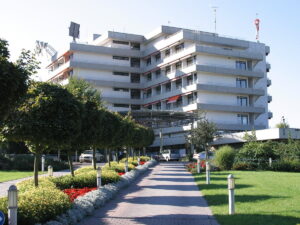

 Bad Krozingen, Germany University Heart Center Freiburg
 -


 Istanbul, Turkey Acibadem Altunizade
 -

 Istanbul, Turkey Acıbadem Ataşehir Clinic
 -

 Antalya, Turkey Hospital Medical Park Antalya
 -

 Istanbul, Turkey Hospital Memorial Şişli
 -


 Milan, Italy San Donato Hospital
 -

 Milan, Italy San Raffaele University Hospital
 -


 Vienna, Austria Debling Private Clinic
 -
 Heidelberg, Germany Heidelberg University Hospital
 -

 Hamburg, Germany Asklepios Nord Heidberg
 -

 Nyon, Switzerland Clinique Genolier
 -

 Istanbul, Turkey Memorial Ataşehir Clinic
 -


 Barcelona, Spain QuironSalud Barcelona Hospital
 -

 Barcelona, Spain Medical Center Teknon
 -
 Barcelona, Spain Sant Joan de Deu Children's Hospital
 -
 Barcelona, Spain University Hospital Barnaclinic+
 -
 Gebze, Turkey Anadolu Clinic
 -
 Zurich, Switzerland Hirslanden Clinic
 -

 Petah Tikva, Israel Schneider Children's Medical Center
 -

 Seoul, South Korea Samsung Medical Center
 -
 Seoul, South Korea SNUH
 -

 Seoul, South Korea Asan Medical Center
 -
 Jerusalem, Israel Hadassah Medical Center
 -
 Petah Tikva, Israel Medical Center Rabin
 -
 Istanbul, Turkey Medipol Mega University Hospital
 -
 Istanbul, Turkey Istanbul Florence Nightingale Hospital
 -

 Geneva, Switzerland Generale-Beaulieu
 -
 Vienna, Austria Private clinic Rudolfinerhaus
 -

 Dubai, UAE American Hospital Dubai
 -
 Berlin, Germany Charité Clinic
 -
 Munich, Germany University Hospital of Munich (Ludwig-Maximilians-Universität)
 -
 Vienna, Austria Wiener Privatklinik (WPK)